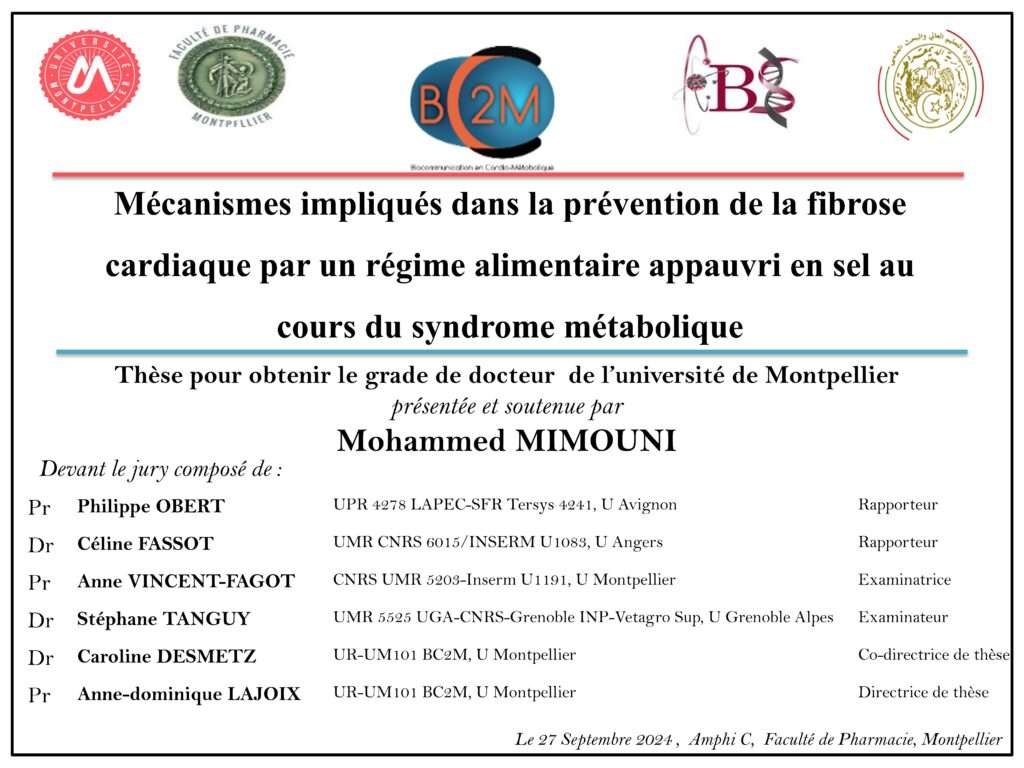
Thesis Defense by Mohammed Mimouni
Presented by Mohammed MIMOUNI
September 27, 2024
Edited by Caroline DESMETZ
Mechanisms Involved in the Prevention of Cardiac Fibrosis Through a Low-Salt Diet in Metabolic Syndrome
Abstract:
Metabolic syndrome, which is exacerbated by excessive fructose consumption, increases the risk of cardiovascular disease, particularly through cardiac fibrosis and diastolic dysfunction. Our research shows that a low-salt diet mitigates these effects, not only by lowering blood pressure but also through additional mechanisms.
To further explore this topic, our research examines two mechanisms underlying this protective effect:
• Endothelial-mesenchymal transition (EMT) and cardiac fibrosis: We have shown that sodium restriction reduces EMT by 37% in the hearts of rats and, for the first time, identified an extracellular matrix protein involved in this process, the inactivation of which inhibits EMT.
• Role of the gut microbiota: A sodium-restricted diet significantly alters the microbial composition, identifying 21 species with potential cardioprotective roles.
This research demonstrates the benefits of a low-salt diet in preventing cardiac damage associated with metabolic syndrome and opens up new diagnostic and therapeutic possibilities for this condition.